
Celeriac is a root vegetable with white flesh and brown tinged skin. It has green stalks that appear similar to celery while growing but the celeriac is often sold trimmed and scrubbed. The celeriac might not be a vegetable your familiar with but it’s highly prized amongst French cuisine and its versatility knows no bounds! It can be roasted, mashed, boiled, steamed and even eaten raw with a taste reminiscent of celery and parsley.
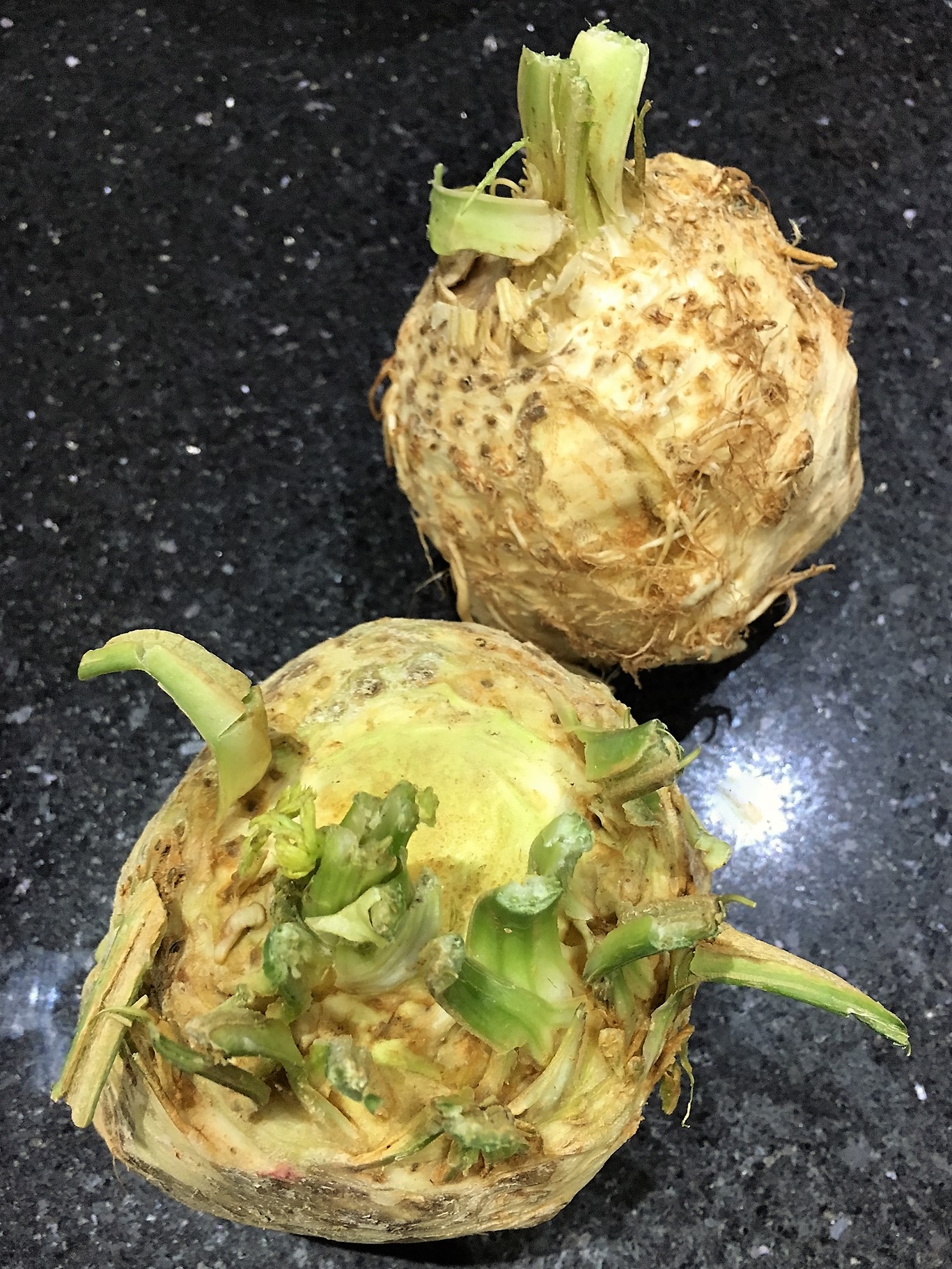
It was first described by botanists in Europe as early as the 1600s where it grew wild and was used for medicinal purposes before it was cultivated around the world by the 19th century (“Celeriac”, 2019). Now, celeriac can be found in most supermarkets and green grocers from March to September for between $3-5 depending on size.
Celeriac has long been a favourite vegetable of mine. I attempted to grow it a few years ago but unfortunately the bulb did not grow big enough to use which I think was due to a lack of soil preparation before planting. However, I got plenty of use from the leaves of the plant which I used in salads and cooking. I even made celeriac salt by gently dehydrating the leaves in the oven until crisp, grinding down to a coarse powder and adding to Murray River pink salt flakes – a delicious natural seasoning that was great on seafood dishes!
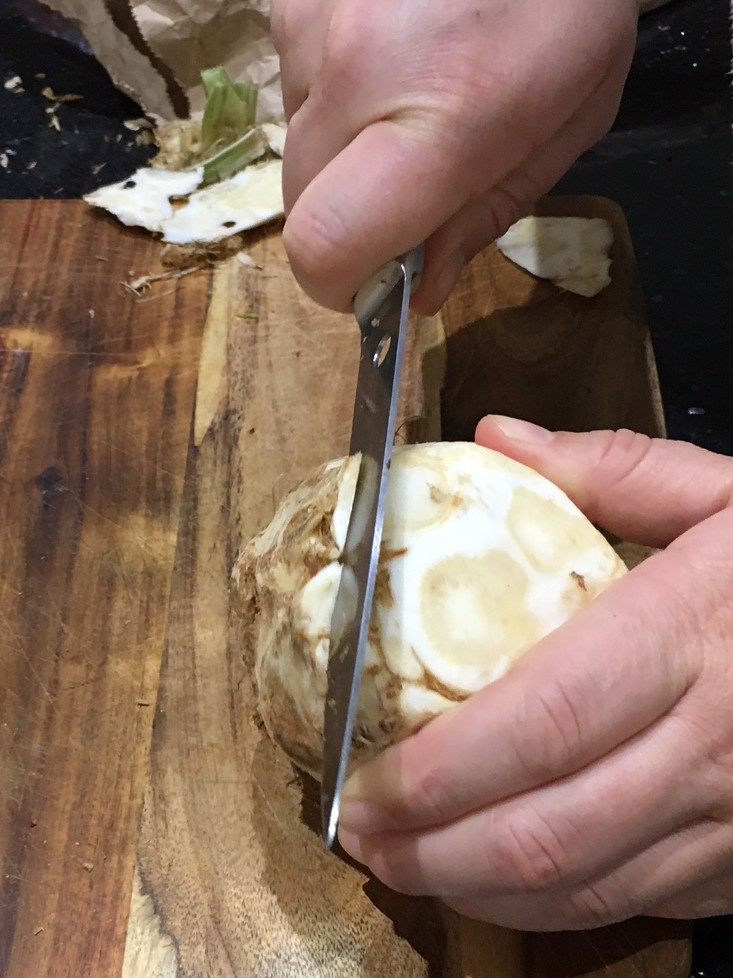
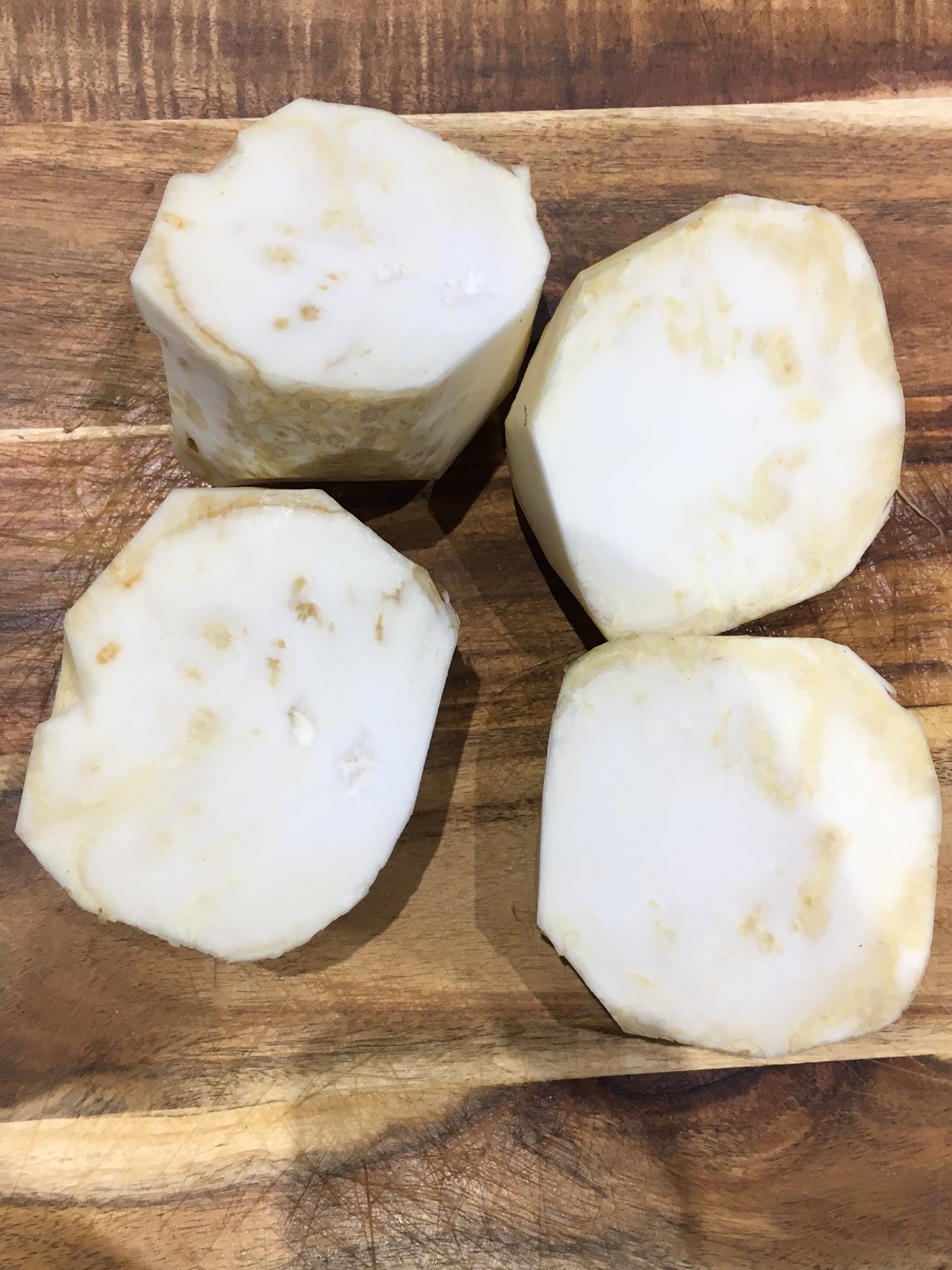
To prepare a celeriac, the brown skin must be completely removed using a paring knife (small knife for peeling vegetables) which can sometimes feel like you’re left with nothing. But persevere, it truly is worth it!
Once you have what resembles a peeled
potato, you can shred, grate or slice to add to a salad. My recommendation
would be finely shaved using a mandolin with sliced navel orange, sliced red
onion, dill sprigs and a light olive oil and sherry vinegar dressing.
Personally, I find the best tasting celeriac is a cooked celeriac. The simplest way to cook celeriac is by roasting it in a pan with some olive oil, fresh herbs like thyme and a pinch of salt which makes a fantastic side for either roast beef or steak.
Seeing as celeriac is readily available over winter, I thought I’d share my recipe for a warming cauliflower and celeriac soup – best served with some crusty sourdough and a dollop of Greek yoghurt.
CAULIFLOWER AND CELERIAC SOUP – SERVES 4 (main)/6 (entrée)
1 large head cauliflower, broken into small pieces
2 medium/large celeriac, prepared and diced
2 leeks, finely sliced (white part only)
2 brown onions, finely diced
2 cloves fresh garlic, crushed and finely chopped
1 tbsp extra virgin olive oil
1 knob good quality butter
1.5 litres vegetable stock
salt & pepper to season
fresh thyme sprigs
Crusty sourdough and natural Greek yoghurt (leave out for vegan option) to serve
- Over medium heat in a large stock pan, heat olive oil and add onions and sauté for around 4 minutes or until the onions soften and turn translucent.
- Add leek, butter and garlic and stir but keep an eye on this so the garlic doesn’t burn.
- Once the leeks have softened and the garlic is aromatic, add the cauliflower, celeriac, stock and the fresh sprigs of thyme (reserving one for garnish)
- Reduce the heat to low and simmer for around 30-40 minutes or until the vegetables are cooked through.
- Remove from heat and allow to cool slightly before using a stick mixer to puree the soup (WARNING: if using a blender, make sure the soup is completely cooled before blending)
Season with salt and pepper before serving with a few slices of sourdough, a dollop of natural Greek yoghurt and a few thyme leaves.
References:
Celeriac. (2019). Retrieved from https://www.betterhealth.vic.gov.au/health/ingredientsprofiles/Celeriac
 What Carly Eats